Data Product Extension
Add to
Sign In
Use Your LeanIX Workspace
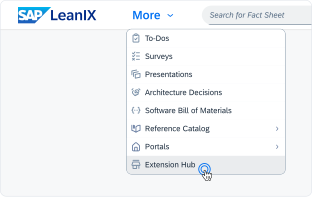
Click 'More' in the main navigation, then select 'Extension Hub'.
You will be signed in automatically.
Change Log
No version history available.
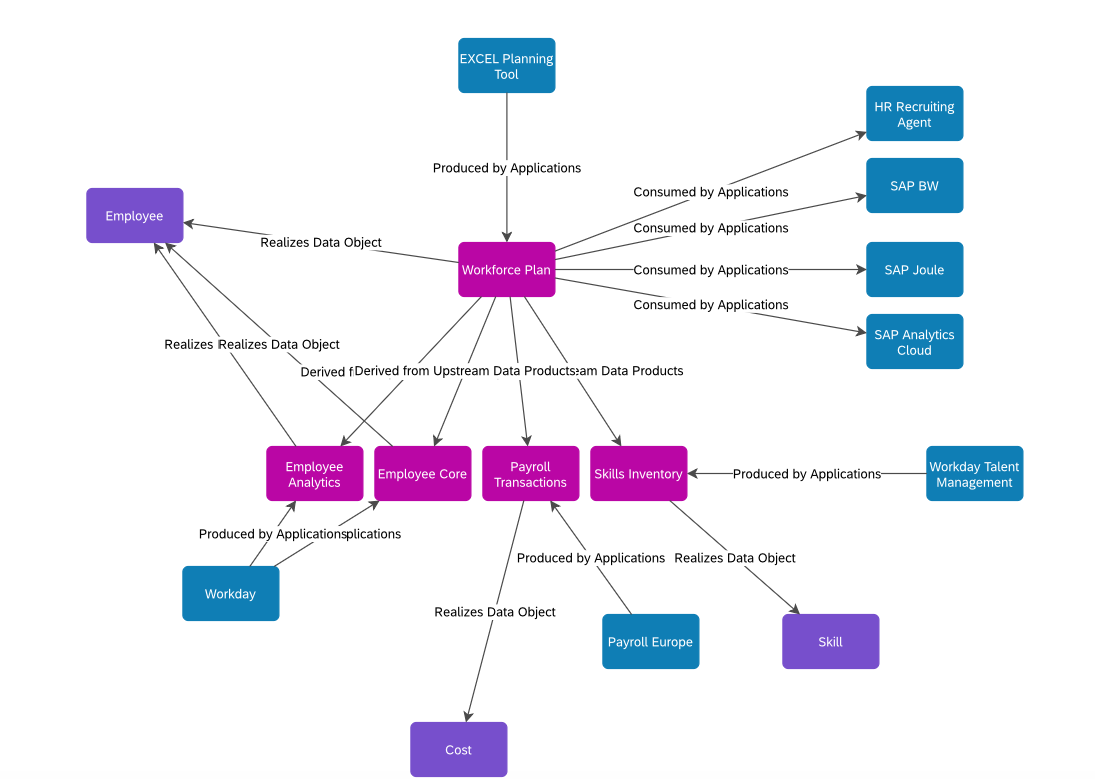
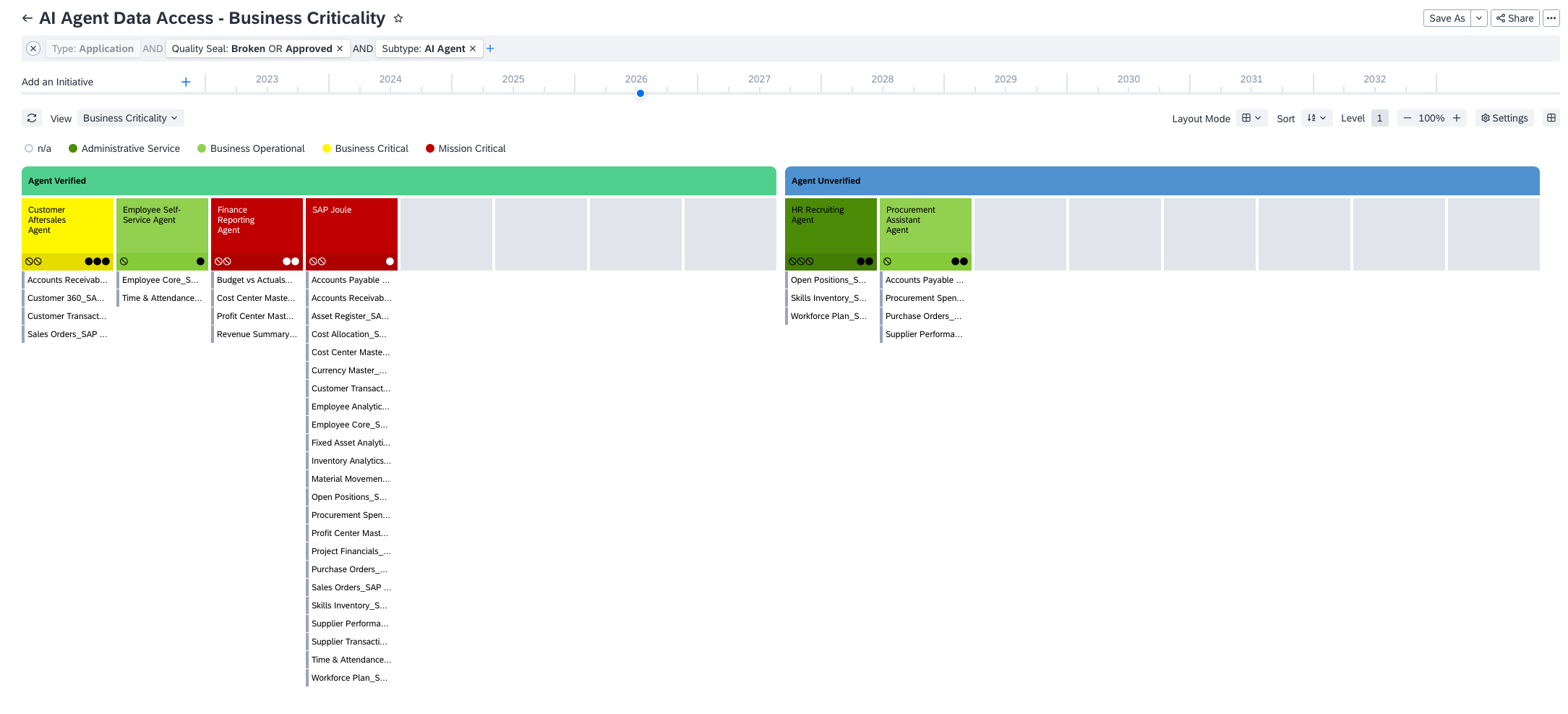
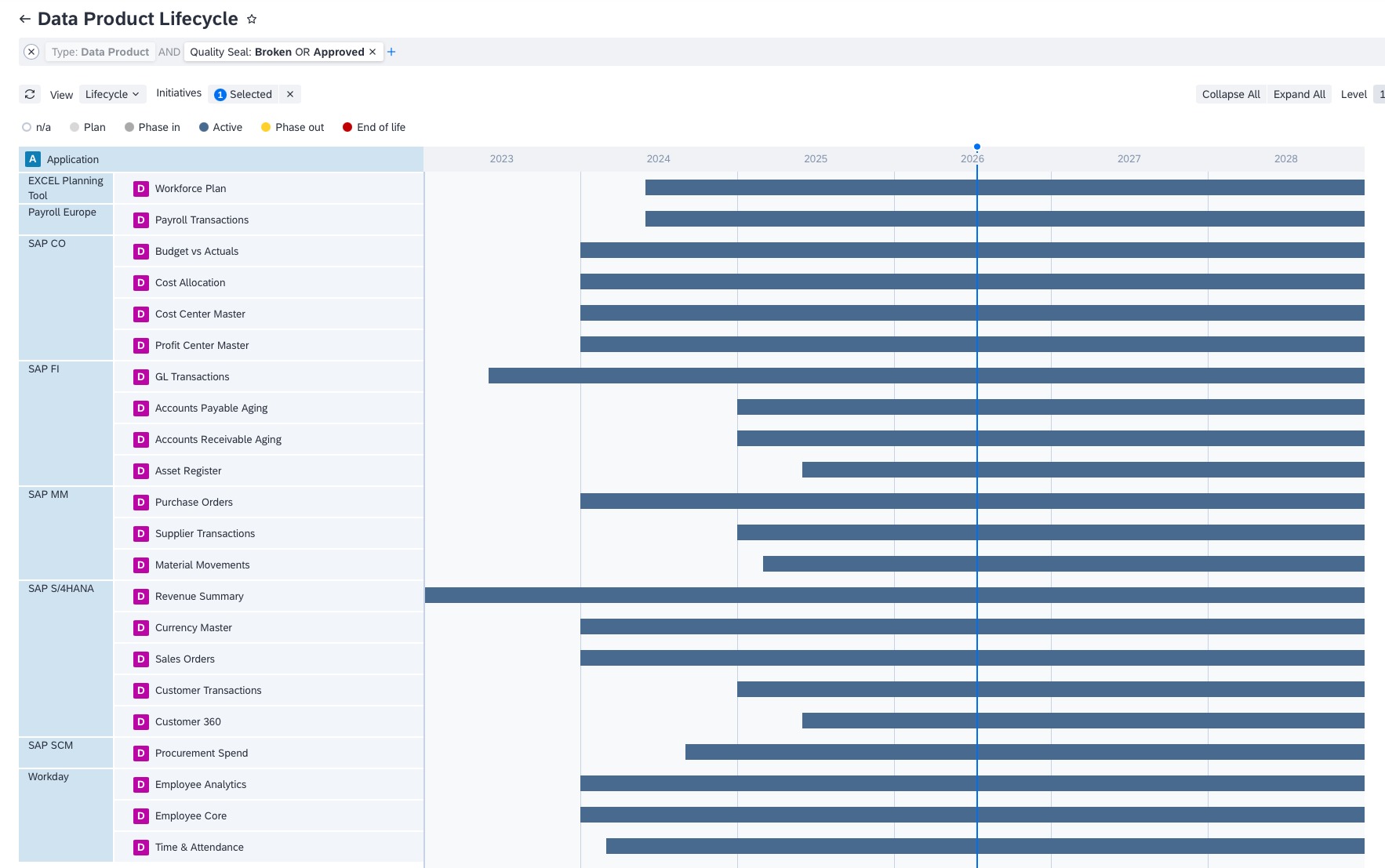
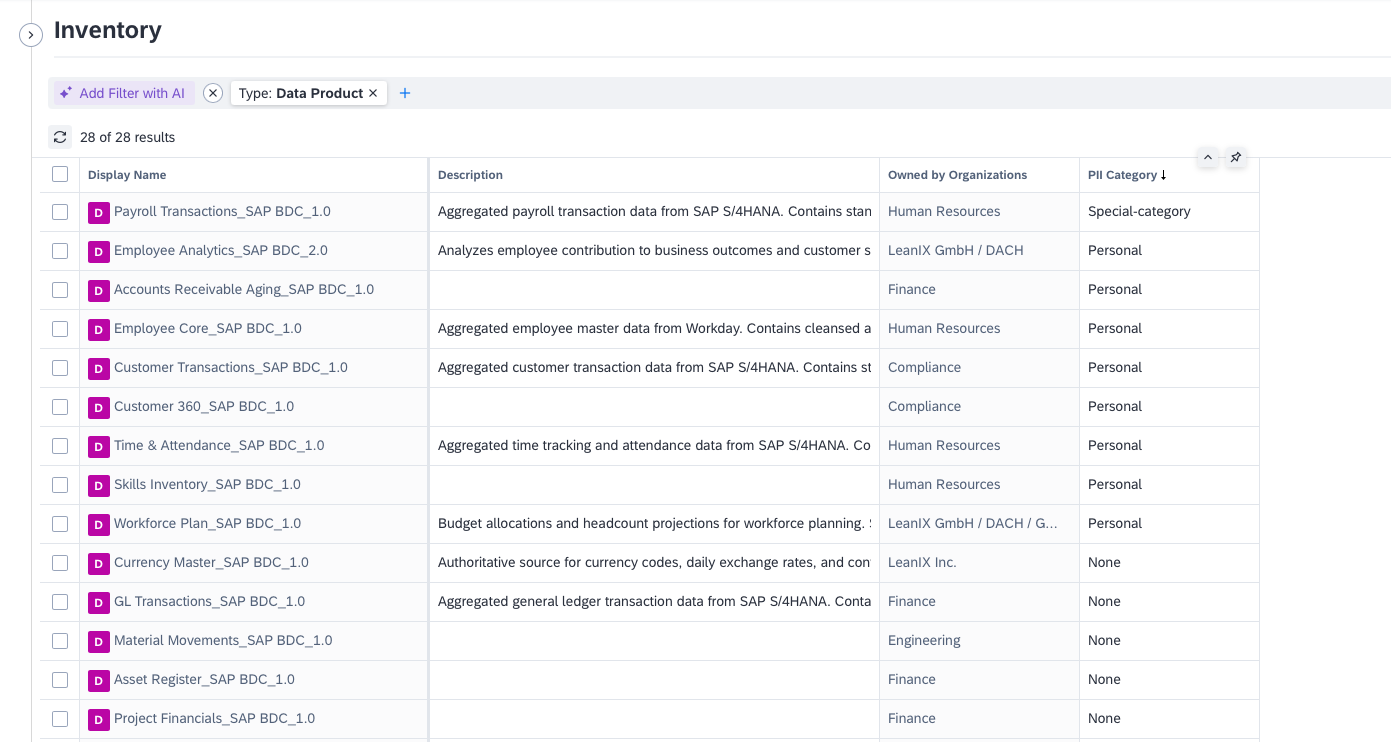
Data products live in catalogs. Applications live in enterprise architecture. Nothing connects the two — until now.
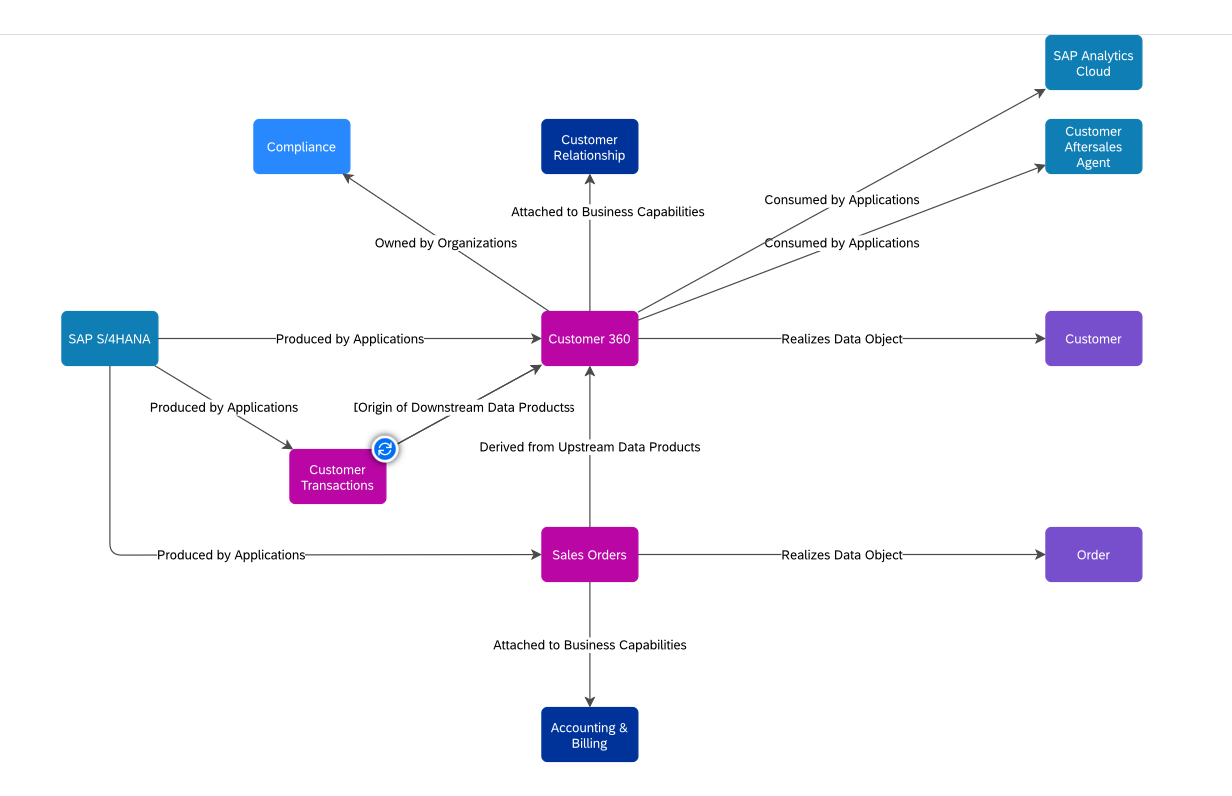
This extension closes the gap between data catalogs and enterprise architecture. It introduces the Data Product fact sheet type to SAP LeanIX. LeanIX becomes the catalog of catalogs: the single place where data architects and enterprise architects make decisions together — focused on the business-critical data products that matter for EA decisions, with business lineage from applications to data products to consumers, grounded in your conceptual data model.
Details
As an enterprise architect, I want to see business lineage from applications to data products to consumers, so I can plan safe transformations without blindsiding downstream systems when I decommission an application.
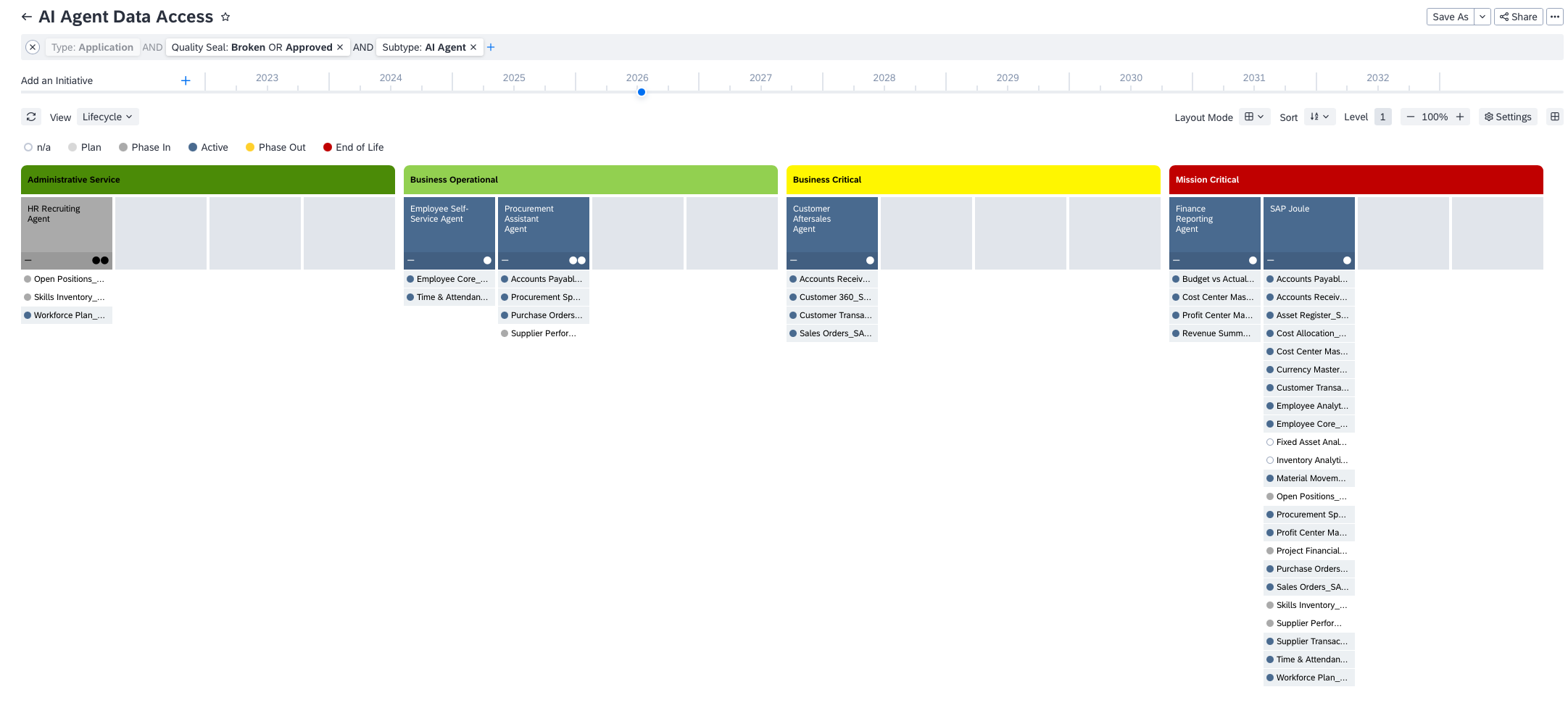
As a data architect, I want to know which applications and AI agents consume my data products, so I can assess the blast radius before changing schemas or deprecating datasets.
As a solution builder, I want to discover which data products already exist before scoping a new solution, so I can reuse instead of rebuild.
As a program lead transforming from a legacy data warehouse to a data mesh, I want to map which reports and tables become which data products — and who consumes them — so I can transition domains incrementally without breaking downstream analytics.
As a data governance lead, I want data products grounded in our conceptual data model, so business terms stay consistent across catalogs and the EA repository.
As a compliance officer, I want documented lineage from business-critical data products to applications for GDPR, DORA, and EU AI Act audits, so evidence is on-demand instead of a last-minute scramble.
This extension requires no other extension.
Disclaimer
Important: The Data Product fact sheet includes 15 standard fields and 7 relationships that cover common enterprise use cases. This metamodel is a starting point — we expect customers to extend it to their individual needs. Add custom fields (Data Quality Score, SLA, Cost Center), additional relationships, or subtypes as your data governance requirements demand.